

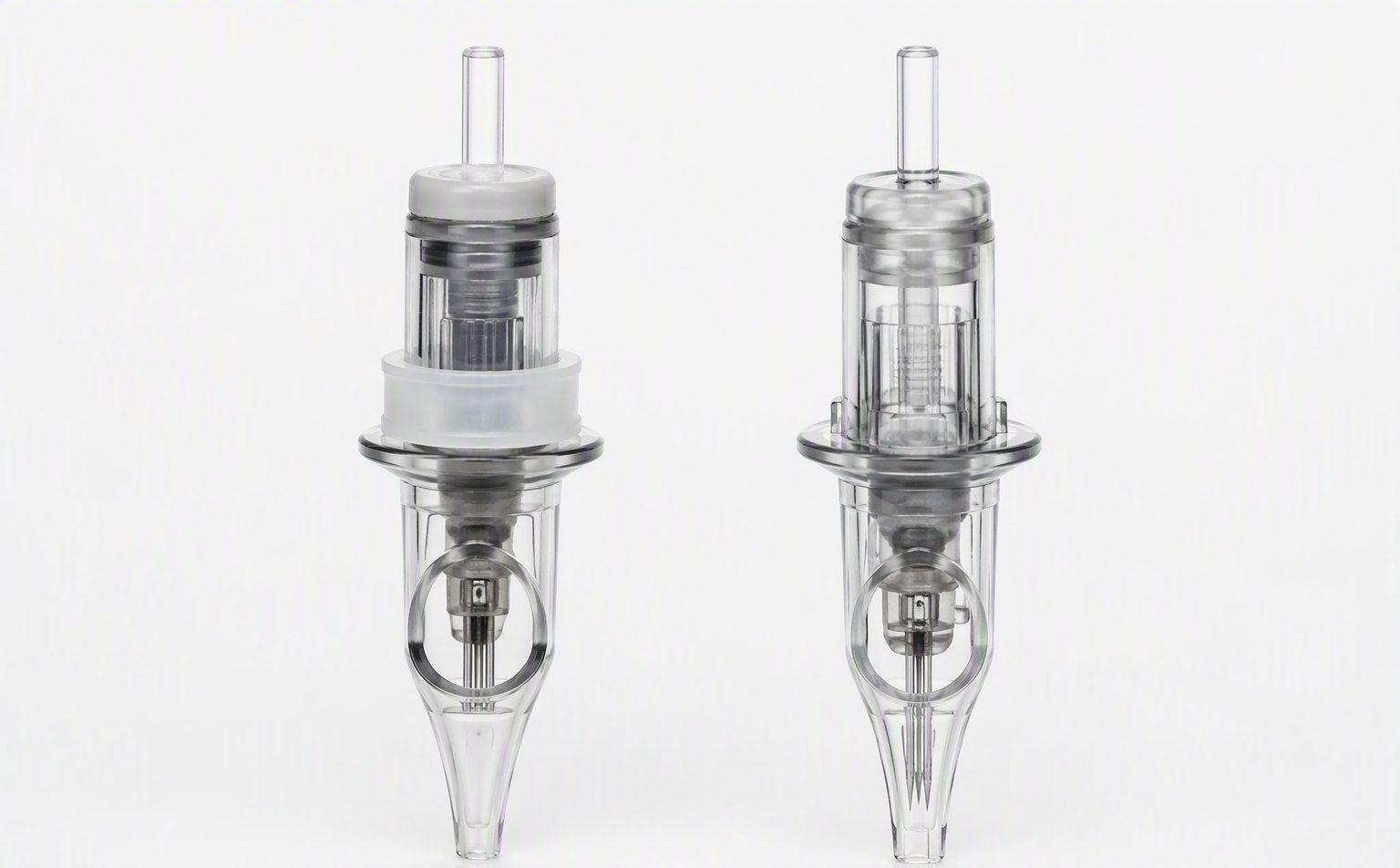
If you are building or expanding a cartridge line, one product decision keeps coming up: stick with the classic one-piece cartridge, or add a silicone-grip (“rubber-wrapped”) version? Both sell — but they sell to different artists, at different price points, with different customization ceilings. Here is an honest comparison to help you decide what to stock.
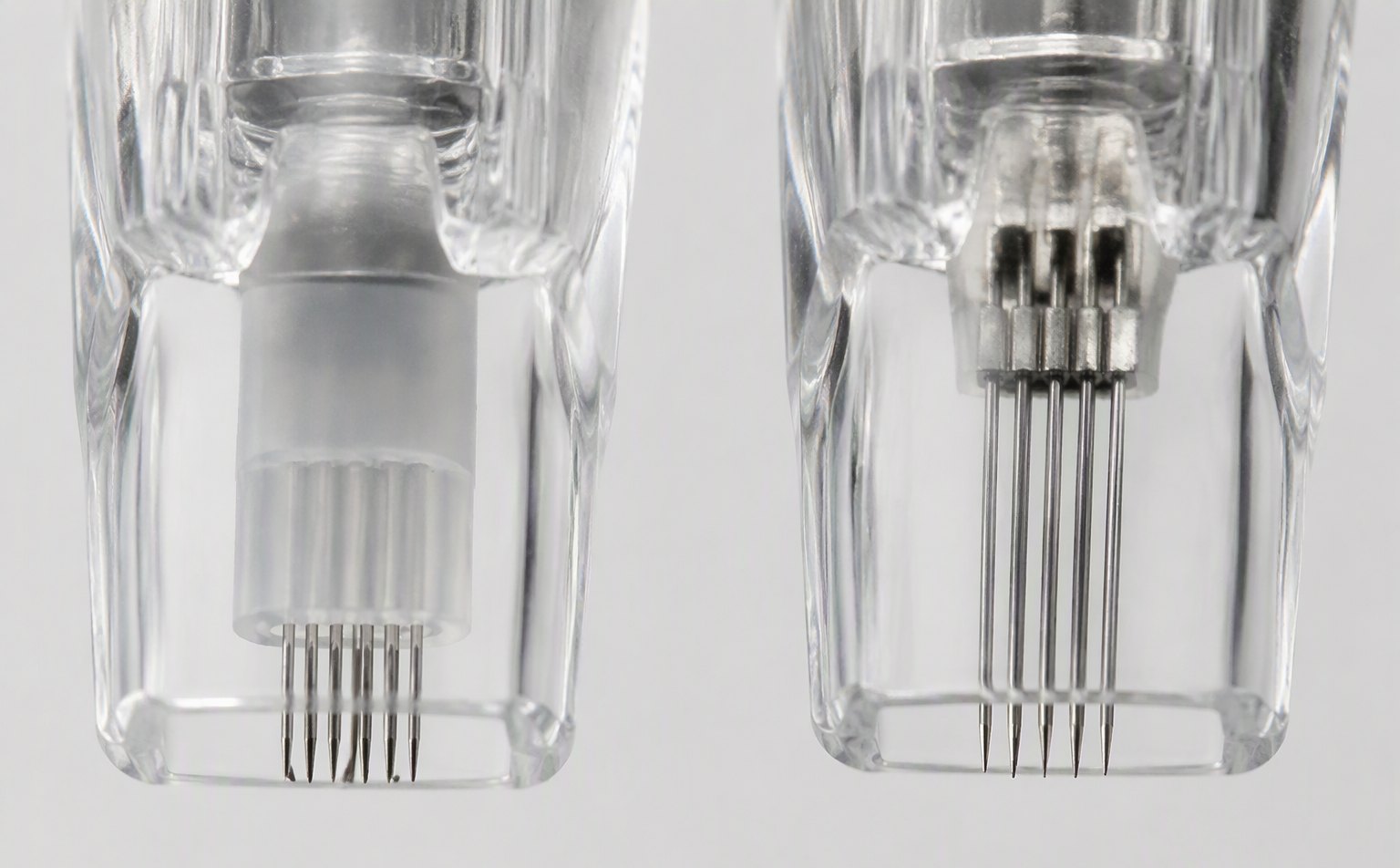
Silicone-Wrapped vs Standard Cartridges: Full Comparison
|
Dimension |
Standard One-Piece Cartridge |
Silicone-Wrapped Cartridge |
|---|---|---|
|
Structure |
Needle housing and grip molded as one piece, no add-ons |
A soft silicone sleeve bonded over the standard cartridge body |
|
Feel in hand |
Hard plastic / metal grip, smooth surface |
Soft, slightly elastic silicone — warmer, cushioned touch |
|
Grip & slip resistance |
Stable when dry; can slip with sweat or oils |
Higher friction surface — resists slipping even during long sessions or with sweaty hands |
|
Hand stability |
Relies on the artist’s own grip control |
Silicone layer cushions and conforms, reducing micro-shake and improving precision |
|
Best for |
Artists who prefer a firm, lightweight grip and dry-hand working |
Long focused sessions, heavy sweaters, artists who prefer a soft grip |
|
Customization |
Needle type, count, grouping, length, grip shape and color |
All of the standard options, plus silicone hardness, color, surface texture and logo embossing |
|
Cost position |
Base model, lower cost |
Added material and process — mid-to-high-end functional product |
|
Cleaning / hygiene |
Smooth surface, easy to wipe; standard single-use |
Silicone does not absorb liquids, but long exposure to some disinfectants can age it — single-use recommended |
|
Visual identity |
Clean single-material look |
Distinct two-material aesthetic; contrast-color or translucent options stand out on the shelf |
Which One Should Your Brand Stock?
The case for standard cartridges
The standard one-piece cartridge remains the volume backbone of the market. It is lighter, cheaper to produce, easier to position at entry and mid price tiers, and familiar to every artist. If you are launching a first line or supplying price-sensitive studios, standard models are where your reorder volume will come from.
The case for silicone-wrapped
Silicone-wrapped cartridges solve a real, felt problem: hand fatigue and slippage during long procedures. Artists who work back-to-back PMU sessions notice the difference immediately, and they stay loyal to it. For brands, the silicone layer is also a branding surface — custom colors, textures (matte, diamond-grip, dotted), embossed or debossed logos, full or partial coverage — a level of visual differentiation a plain plastic grip cannot offer.
The practical answer for most buyers
Stock both, positioned as a good-better pair: standard models as your volume line, silicone-wrapped as the premium upgrade. The two share the same needle configurations, so artists can switch without relearning — and your brand captures both the price-driven and the comfort-driven customer.
Customization Options at a Glance
Both versions are produced on the same ISO 13485 certified lines, EO-sterilized and batch-coded. Sampling is fast — standard models typically 5–7 days, silicone-wrapped 7–10 days — so you can test both with your artists before committing. See the full scope of options on our OEM / private label page or request samples.