
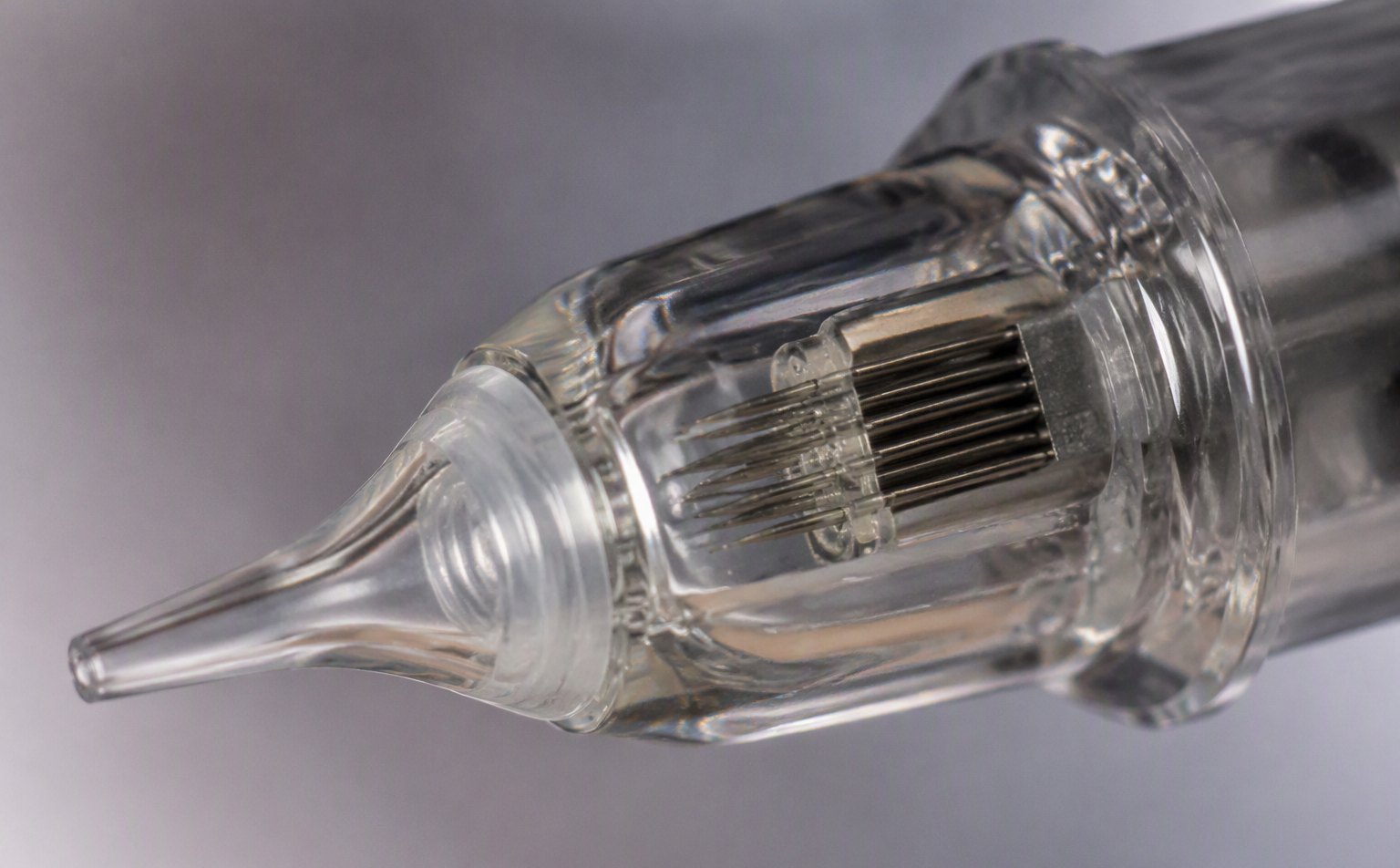
The Small Rubber Part That Does the Biggest Job
Most new artists spend hours studying needle groupings and diameters. They memorize the tattoo needle cartridges size chart, then buy the cheapest cartridges they can find. We think that is backward. The membrane matters more than the needle size.
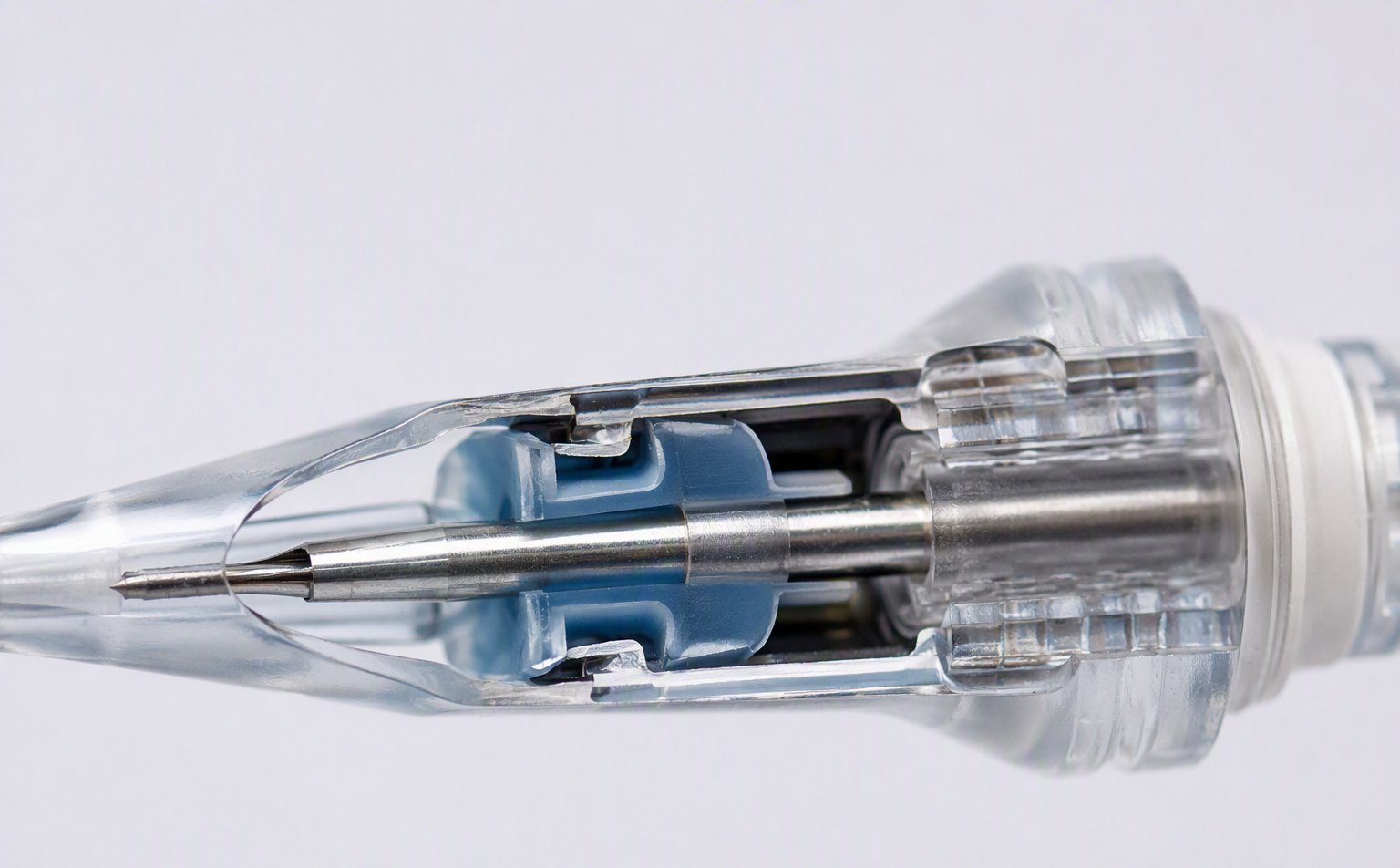
A membrane is a small silicone or rubber barrier built into the cartridge housing. It seals the needle bar off from the machine’s drive rod.
Modern hygiene standards are built around this one part. Without it, you are not just risking your reputation. You are gambling with your client’s health.
How a Membrane Works: The Backflow Problem
When your machine runs, the needle moves up and down 50 to 3,000 times per minute. That motion creates suction. Ink, blood, and plasma climb up the needle bar. Without a barrier, they have a straight path into your machine.
⚠️ Prevent Cross Contamination in Tattooing: This is not a theory. Once fluid gets into your pen’s drive bar or motor housing, you cannot sterilize it, because autoclaves destroy electronics. The machine becomes a home for bloodborne pathogens like hepatitis and HIV. Your next client sits down, and the last client’s fluids ride back down on the next needle.
The membrane works like a lock. It wraps the needle bar at the back of the cartridge, flexes with every stroke, and never opens a path backward. One small part. One huge job.
Membrane vs Spring Cartridges
Early disposable cartridges used metal springs to pull the needle back. You still see them in bargain brands. They work. Until they don’t.
Silicone membranes replaced springs for a good reason. They do two jobs at once: they pull the needle back, and they seal the rear of the cartridge completely.
The difference is clear. A membrane seals fully, with no path for fluid. It runs quietly, with no metal click on the return stroke. And the tension stays the same for the life of the cartridge, because silicone does not fatigue like metal.
A Membrane Also Protects Your Machine
A professional rotary pen costs $200 to $800, and custom builds cost more. When fluids get past the cartridge and into the motor, they corrode parts and short the circuit boards. You will not see it right away. First sticky bearings. Then uneven speed. Then a dead machine.
With a proper membrane cartridge, you wipe the grip between clients and that is most of the job. No stripping the machine down after every session to hunt for contamination. Fewer deep cleans, fewer repair bills.
Membranes Help Performance Too
Good silicone absorbs sideways vibration, so the needle tracks straighter. Lines land cleaner and saturation gets more predictable.
Not all membranes are equal. Too thick, and the motor works harder and heats up. Too thin, and the needle feels mushy. We calibrate the tension for each needle grouping, so you get a crisp snap without taxing the machine.
💡 Pro Tip
Membrane cartridges also run quieter than spring setups. Less mechanical chatter means a more relaxed client. A relaxed client holds still better.
How to Spot a Quality Membrane Cartridge
Hold the cartridge up to the light. A transparent housing lets you see whether the membrane is seated properly. If you cannot see it, you cannot check it.
Press the needle tip gently with a gloved finger or a rubber pad. The bar should spring back smoothly, with no grinding or catching. Any grittiness means the membrane is misaligned, or missing altogether.
 R&G BIO: The Factory Behind Your Cartridges
We build every cartridge around a medical-grade silicone membrane, with full CE and ISO certification. Every batch is tested in-house before it leaves our factory.
Safety Is Not Where You Cut Costs
Budgets are real, especially when you are starting out. But saving a few cents per cartridge on no-membrane disposables is the wrong place to save. A bloodborne infection, a lawsuit, or a dead machine costs more than you will ever save.
RGBIO builds every cartridge around a medical-grade silicone membrane. The transparent housing lets you check the seal before you even unwrap it. Tension is set for each needle grouping, and every batch is fully traceable.