

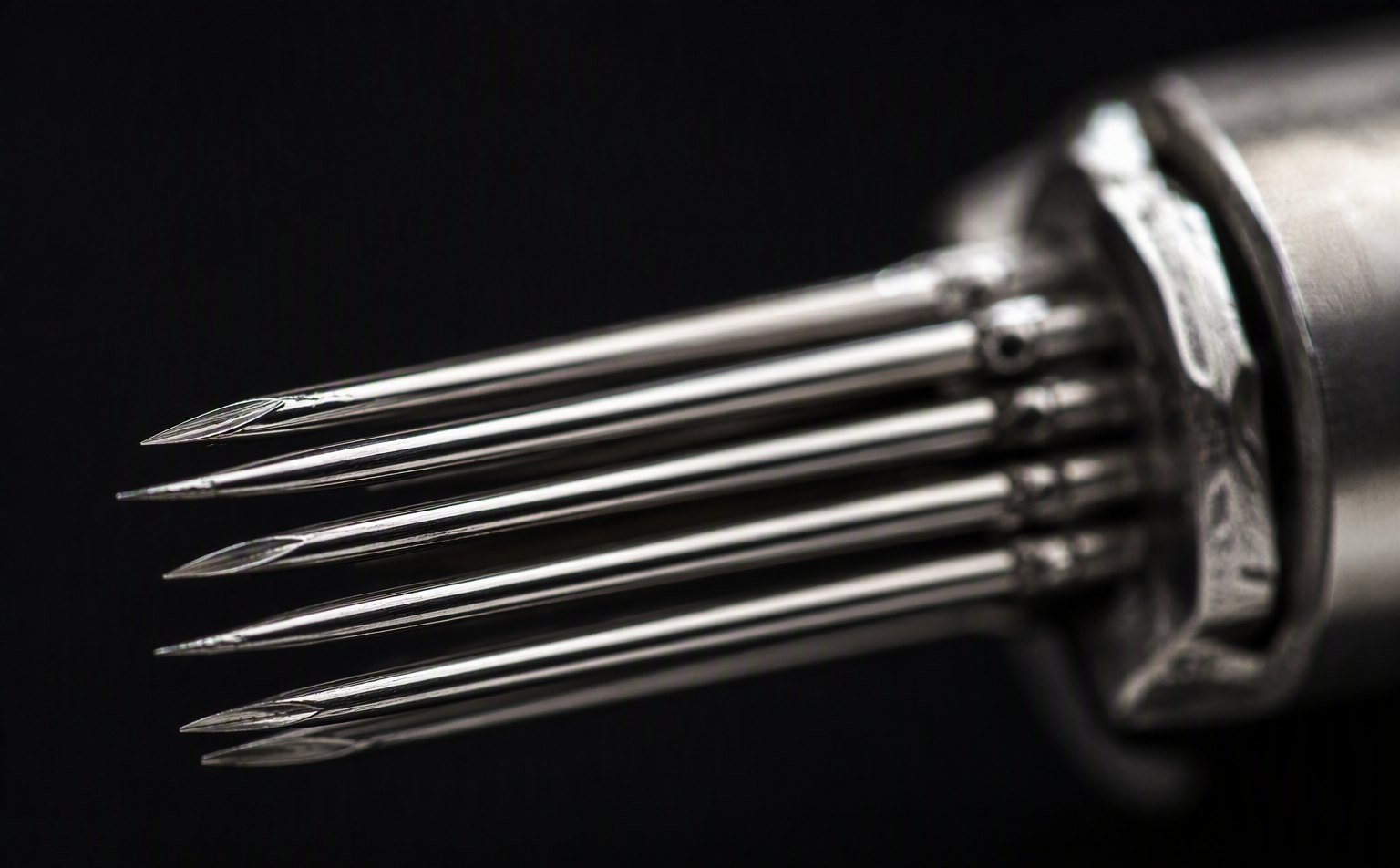
Ask any experienced PMU or tattoo artist what separates a great cartridge from an average one, and the answer usually comes back to the needle wire itself. Today most professional cartridges on the market use wire from one of three origins — Japan, South Korea, or China — and the differences are real, measurable, and worth understanding before you commit to a supplier or a private-label line.
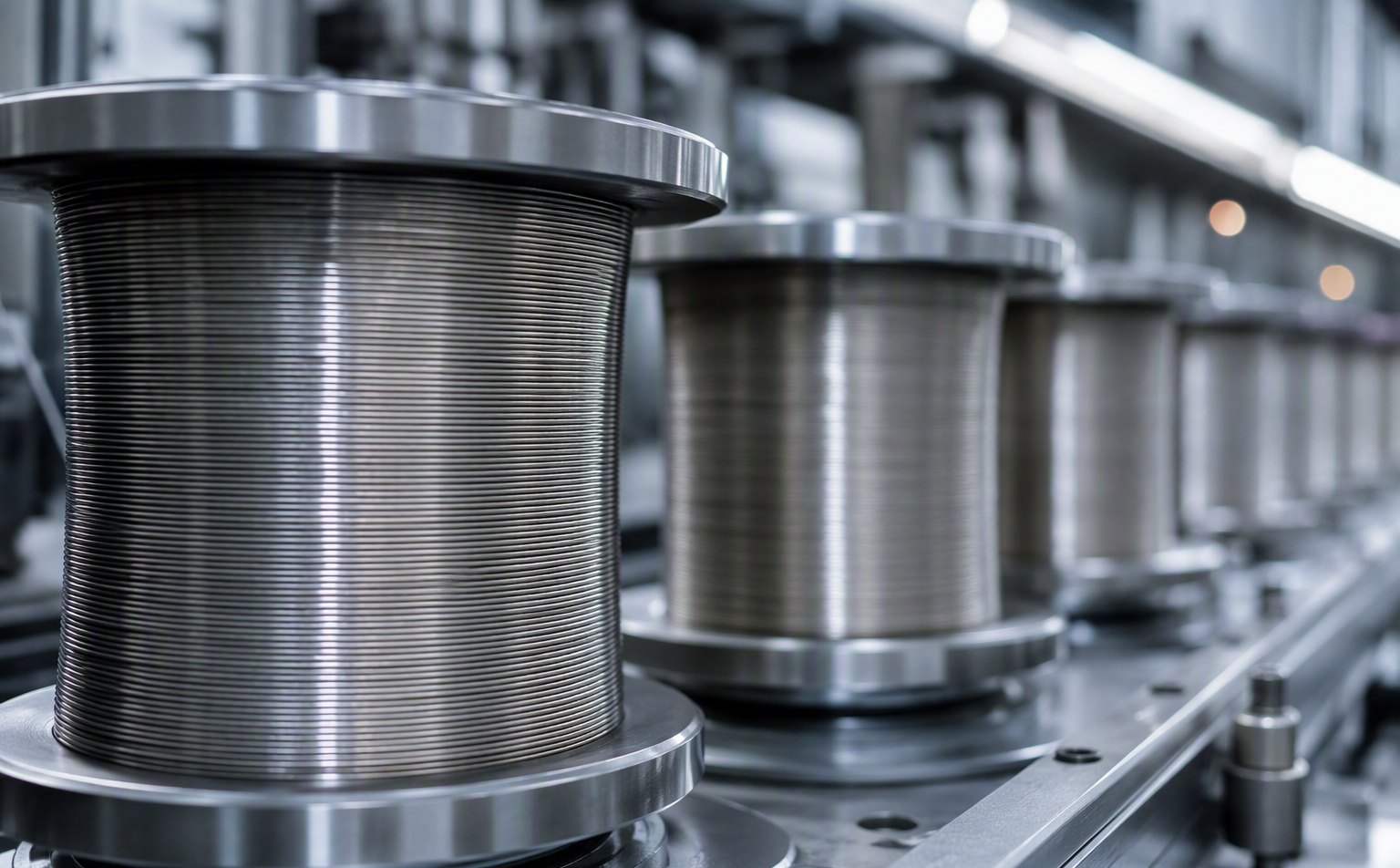
Japanese vs Korean vs Chinese Needle Wire: Side by Side
|
Feature |
Japanese Import |
Korean Import |
Chinese Domestic |
|---|---|---|---|
|
Positioning |
Top-tier, ultra-sharp; the penetration benchmark |
Balanced performance, strong value |
Reliable mainstream choice, best cost-effectiveness |
|
Material |
High-purity spring / piano steel, uniform grain |
Medical-grade stainless steel (316L class) |
Medical-grade stainless steel meeting national standards |
|
Hardness (HRC) |
~48–53, sharp and highly wear-resistant |
~46–50, balanced hardness and toughness, resists breakage |
~45–48, mature processing, covers daily professional use |
|
Penetration feel |
Excellent — very low resistance, extremely smooth |
Very good — slightly “firmer” but precise and directional |
Good — depends heavily on taper-grinding precision |
|
Surface finish |
Advanced mirror polishing, extremely low friction |
Electrolytic polishing, high smoothness |
Mechanical + chemical polishing; top OEMs reach high finish |
|
Durability |
Stays sharp through long sessions |
Reliable for a full procedure |
Covers standard session length; slight fade toward the end |
|
Batch consistency |
Industry benchmark, minimal variation |
Stable under strict QC |
Fairly stable from top-tier OEM factories |
|
Price tier |
Premium — highest cost |
Mid-high — fair for the quality |
Low-mid — the mainstream market choice |
What the Differences Mean in Practice
Japanese wire — for flagship lines
Japanese steel processing is the global benchmark. Needles penetrate with noticeably less resistance, hold their point through long sessions, and show minimal batch-to-batch variation. Many non-Japanese brands advertise “Japanese imported wire” — the raw material performance is usually genuine, but remember that final sharpness also depends on the assembly and taper-grinding process that follows. Best fit: premium product lines, artists doing competition-level or high-detail work.
Korean wire — the golden balance
Korean wire strikes the most practical balance between price and performance. Penetration is excellent — marginally “firmer” than Japanese wire, but with good directional control — and electrolytic polishing gives a consistently smooth surface. It is the option that rarely goes wrong for professional studios, and it is widely used across the Asian PMU market.
Chinese domestic wire — the volume workhorse
Top Chinese OEM factories now run mature QC systems and deliver perfectly reliable wire for standard professional use at the most competitive cost. The caveat is variance between suppliers: top-tier producers are solid, while unstable low-end sources carry risks that far outweigh the savings. For practice lines, high-volume studio supply, and price-sensitive markets, a stable domestic wire from a qualified factory is a rational choice.
Where Artists Feel the Difference Most
The performance gap between the three origins is most obvious in fine hair-stroke brow work, where needle resistance and point retention directly affect line quality. For shading, powder brows and lip work, the gap narrows considerably — technique and machine settings matter more. If your customers do precision line work, steer them toward Japanese or Korean wire; for general-purpose and high-volume use, a well-made domestic wire performs beyond its price point.
Sourcing Recommendations
Whatever the wire origin, the cartridge behind it should still come from a certified, traceable production line. Our cartridges are EO-sterilized, batch-coded and produced in Class 100,000 cleanrooms under an ISO 13485 quality system — and for OEM / private-label projects we can quote different wire options for the same configuration, so you can position each line exactly where your market expects it. Talk to our team about samples.