

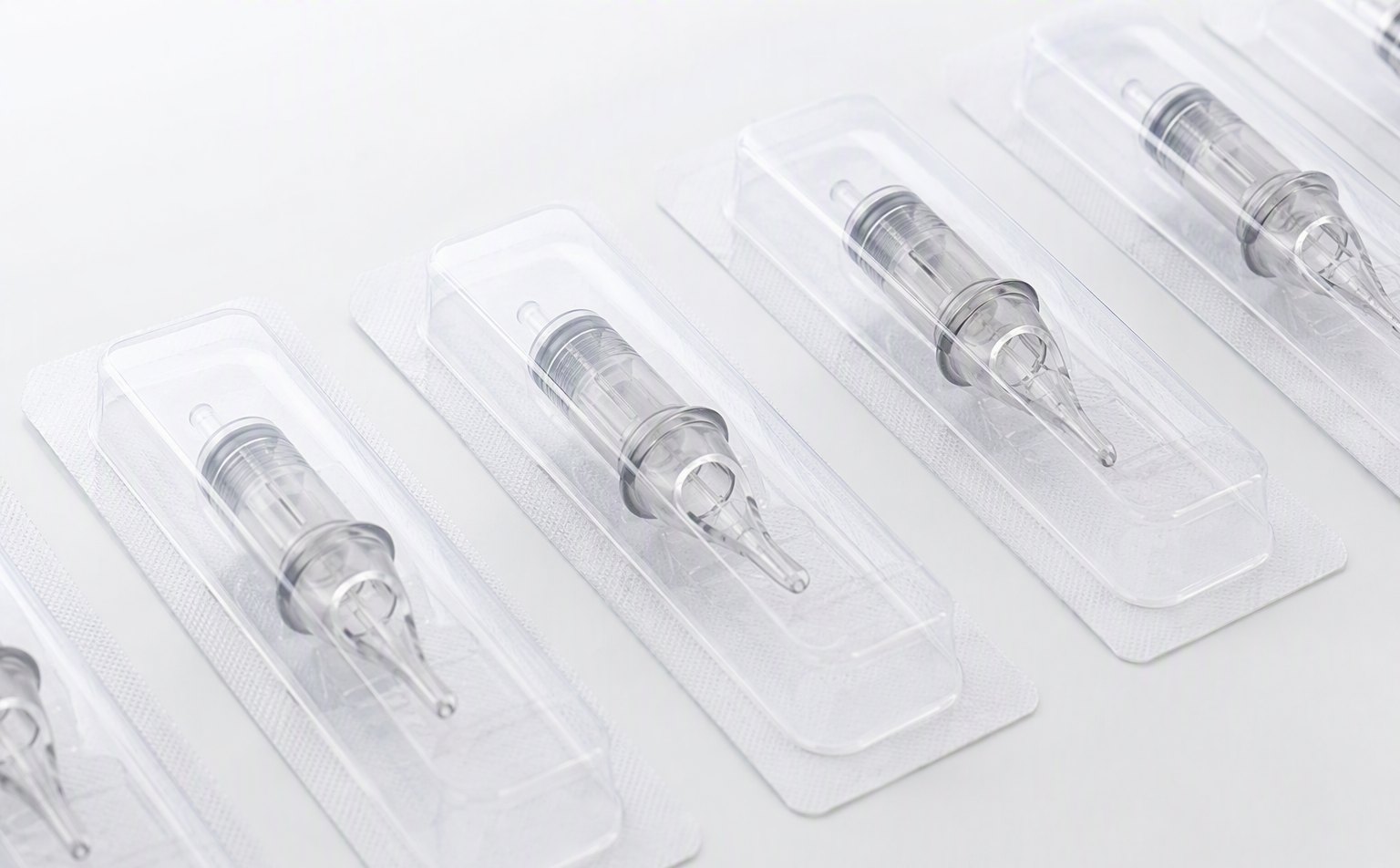
Why Disposable Tattoo Cartridges Dominate the Market
Ten years ago we were still hand-soldering needle bars in batches of five hundred. Today our molding machines turn out cartridge hubs every four seconds, around the clock. The change happened fast. In 2026, disposable cartridges are not the alternative anymore. They are the default. Walk into any supplier warehouse and the traditional needle-on-bar stock sits on one shelf in the corner. Here is why the market moved, and why it is not going back.
1. The End of the Bar and Tube Era
The global tattoo supplies market passed $1.9 billion in 2026, and cartridges make up most of the needle sales in professional studios across North America, Europe, and East Asia. We see it in our own order books. Five years ago, cartridges were thirty percent of our needle output. Now they are eighty-seven percent. The rest goes mostly to traditionalists and teaching academies that still want students to learn the old way.
This is not a story about convenience. Convenience sells to hobbyists. Working professionals switched for three reasons: sterility rules got stricter, machines got smaller, and studio budgets got tighter. Artists did not switch because cartridges are easier. They switched because the old way stopped being competitive.
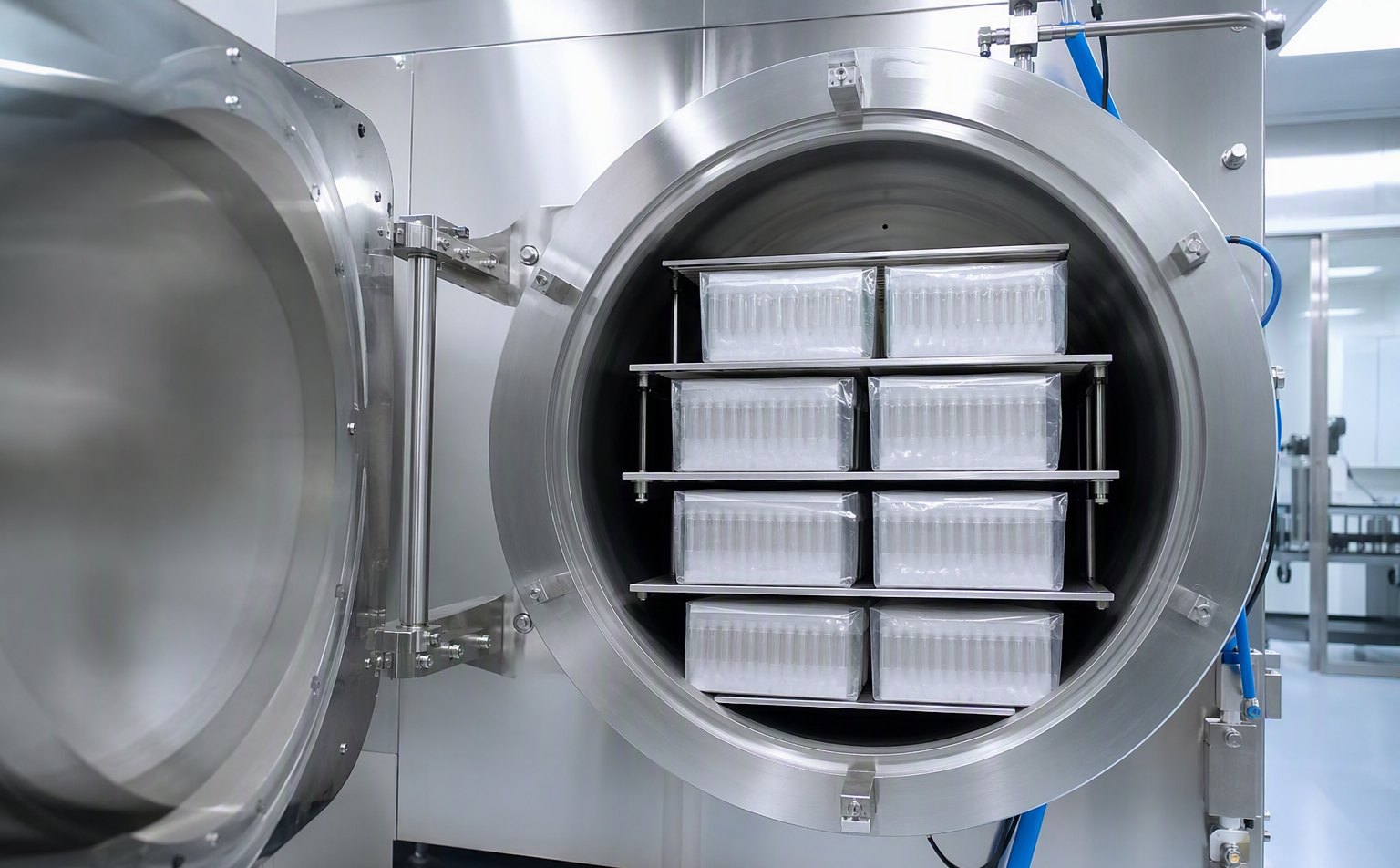
2. Safety and Regulation Come First
Regulators finally caught up with what artists have known for decades: reusing anything that touches blood is a gamble. The FDA’s MoCRA rules and the EU’s expanded REACH oversight now require traceability for every consumable that enters skin. A hand-built needle bar carries no serial number. A cartridge blister pack does.
The Membrane That Changed Everything
Inside every quality cartridge hub sits a silicone membrane, usually about 0.3mm thick. It works as a one-way gate. Ink flows down to the needle. Blood and plasma cannot flow back up into the grip. We test every production batch with dyed fluid at 0.3 bar pressure. One leaking membrane and the whole lot gets scrapped. That kind of consistency is impossible with traditional bars, which have no barrier between needle and machine at all.
Serialization and Traceability
Every one of our cartridge packs carries a laser-etched batch code. If a client has a reaction, the studio can trace the exact production run, the sterilization cycle, and the raw material source. Try doing that with a box of loose needle bars. Regulators in Germany and California now ask for exactly this level of documentation. Disposable packaging makes compliance automatic.
Machine Precision vs. Human Variance
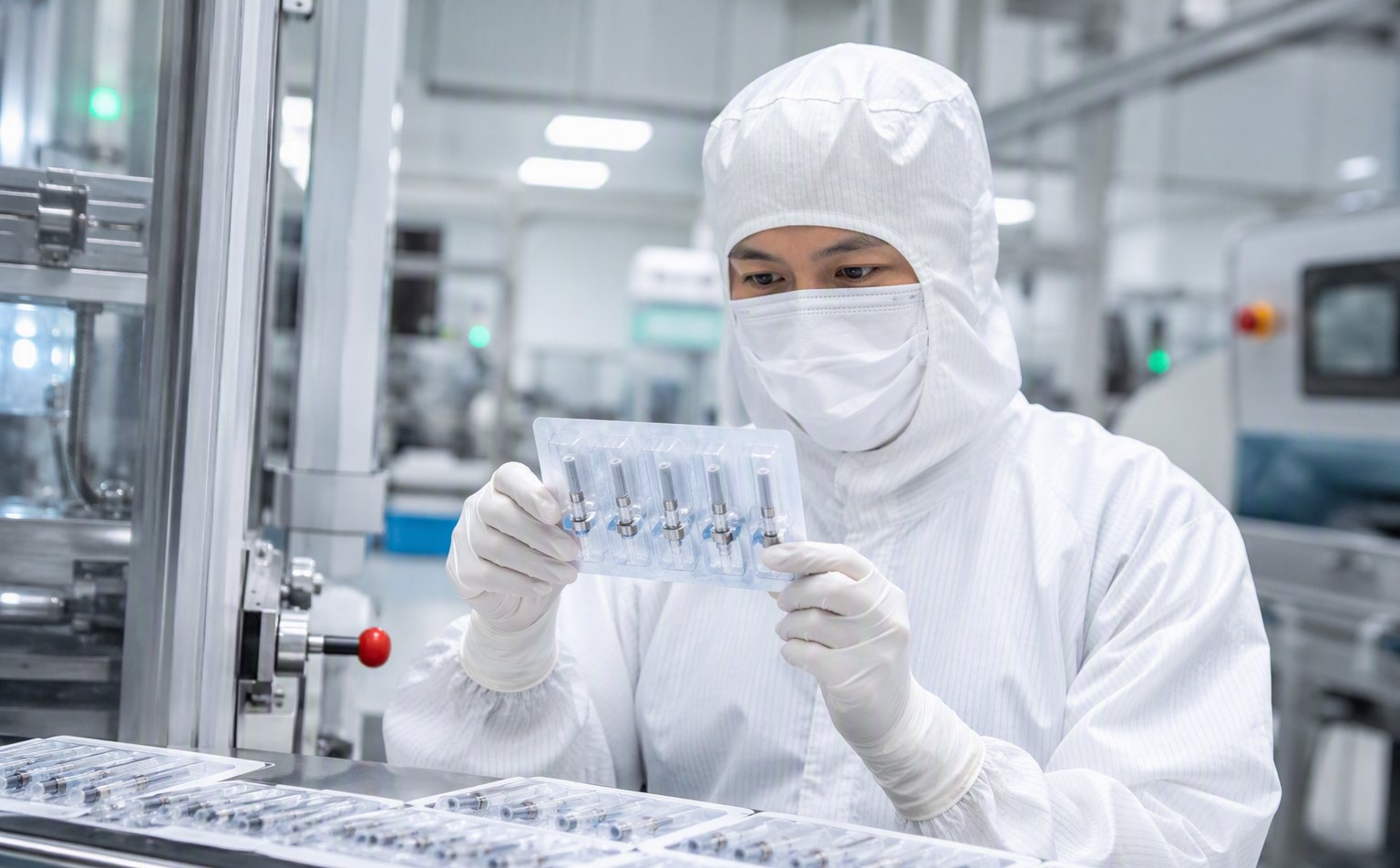
A soldered needle bar depends on how steady a technician’s hand is. Our cartridge needles are welded by resistance machines with 0.02mm positional accuracy, and the joints are inspected by camera, not by eye. Open a fresh cartridge and the grouping is exactly what the label says. With handmade bars, a 0.5mm difference between needles is common, and you see it in the skin as blown lines and uneven shading.
💡 Factory Floor Note
We keep the rejected cartridges from every shift for internal review. The defect we catch most is membrane seating depth, not needle alignment. A membrane sitting 0.1mm too shallow tears during installation. Too deep, and it restricts needle travel. This is why no-name cartridges fail more often. Holding that tolerance takes serious tooling, and that costs money.
3. The Time Savings Add Up
A traditional setup means autoclaving, ultrasonic cleaning, wrapping, unwrapping, and threading rubber bands. The whole cycle eats fifteen to twenty minutes per needle change. A cartridge swap takes 30 seconds. In a full-day session with four to six needle changes, that is over an hour back. An hour you can bill, or an hour that lets the artist finish earlier and book one more client tomorrow.
Turnover Is Revenue
Studios that switched to all-disposable workflows tell us rooms turn over faster. No waiting on the autoclave, no midday cleaning ritual delaying the next appointment. The math is simple. A three-room studio can fit one extra appointment per room per day if setup and teardown each shrink by twenty minutes. At $150 a session, that is $450 more per day. Over a year, six figures, just from cutting dead time.
Ergonomics and Fatigue
A modern cartridge weighs between 1.5 and 3 grams depending on the grouping. A traditional steel bar with tube can hit 40 grams. Multiply that by six hours of hand motion and the difference in wrist strain is huge. Pair a light cartridge with a wireless pen under 150 grams, and artists can work longer without the wrist and hand problems that end careers.
4. Wireless Pens and Cartridges Grew Up Together
The wireless pen boom and the cartridge takeover are the same story from two angles. You cannot build a light wireless machine around a bulky steel tube and a rubber-band needle bar. The physics do not work. Cartridges are what let machine designers drop the cords, power supplies, and foot switches.
Built-In Stabilizers
Premium cartridges now include an internal stabilizer sleeve, so the needle rides in a close-tolerance guide instead of open space. At 8,000 cycles per minute, a needle with 0.1mm of sideways play draws a line that looks fuzzy under magnification. Our stabilizer molds hold the needle within 0.03mm of center. That means cleaner lines at higher speeds, which matters when artists run rotaries at voltages that would have shaken a coil machine apart.
The Universal Standard
The cartridge shape has settled around a common standard. A Cheyenne-style hub fits most modern grips. A Bishop-compatible cartridge works in FK Irons machines. Artists mix brands based on needle preference, not machine compatibility. Five years ago every manufacturer tried to lock users into their own format. The market said no. Standardization won.
💡 Pro Tip
Testing a new cartridge brand in your wireless pen? Run it at your normal voltage for ten minutes with no load and listen. A poorly molded hub rattles at certain frequencies. Good cartridges run quiet. Cheap ones buzz. Your hand will tell you before your eyes do.
5. Sustainability: The Plastic Problem
The fair criticism of disposable cartridges is waste. A busy artist can go through fifty plastic hubs in a week. The industry is answering. In 2026, several manufacturers, including competitors we respect, have moved to bio-based plastics and paper blister packs. Magic Moon switched to entirely paper-based packaging. Our own R&D team is testing PHA biopolymer hubs that break down in industrial compost within ninety days.
The needle itself is stainless steel, as it always has been. The change is in the hub material and the outer packaging. Studios are getting smarter about sorting waste too. Sharps still go to medical incineration, but clean plastic hubs and cardboard can enter recycling in cities with the right facilities. It is not perfect. But it beats pretending a steel bar autoclaved fifty times is automatically greener than a single-use hub. Repeated sterilization has its own energy and water footprint.
6. Cost vs. Value
A single cartridge costs roughly three to eight times a basic needle bar. On a spreadsheet that looks like a loss. It is not. Add the labor for cleaning, the cost of the autoclave and ultrasonic bath, replacement tubes and grips, lower insurance premiums from disposable protocols, and the marketing value of telling nervous clients you use single-use needles. For most studio models, the total cost favors cartridges after about six months.
Inventory got simpler too. Studio software like Zylu tracks SKU usage in real time. An artist notices 7-round liners are moving faster than expected, and the manager orders before stock runs out. No guessing, no emergency rush orders. Predictable consumption makes cartridge budgets easier than the irregular replacement cycle of tubes and bars.
Cartridge Price × Session Volume + Labor Saved + Risk Reduced = Higher Net Profit
⚠️ The Hidden Cost Trap: Cheap cartridges from unknown sources often skip the membrane or use recycled needles with uneven sharpening. A $0.40 cartridge that blows a line on a $2,000 sleeve costs far more than a $1.20 premium unit. We see the returns. The pattern is obvious.
7. Conclusion: Disposable Won
Needle bars will not disappear completely. They will become a specialty item, like tube amplifiers in a digital world. Some artists will keep a coil machine and a set of soldered bars for the feel and the nostalgia. For daily professional work, though, the disposable cartridge has won on every measure that matters: safety, speed, precision, comfort, and cost.
Switching to cartridges is not about abandoning craft. It is about removing friction so the craft can shine. The best artists we supply all tell us the same thing: they stopped thinking about their tools and started thinking about their art. That is the point. Good equipment should disappear into the work.
Better Tools. Better Workflow. Better Art.
What Is Holding You Back?
Still running traditional needle bars? Tell us why. Cost? Habit? Not trusting the format? We have heard every reason, and we have data on most of them. Drop your questions in the comments. Our engineers and production team read them all. If there is a real technical concern we have not answered, we want to hear it.